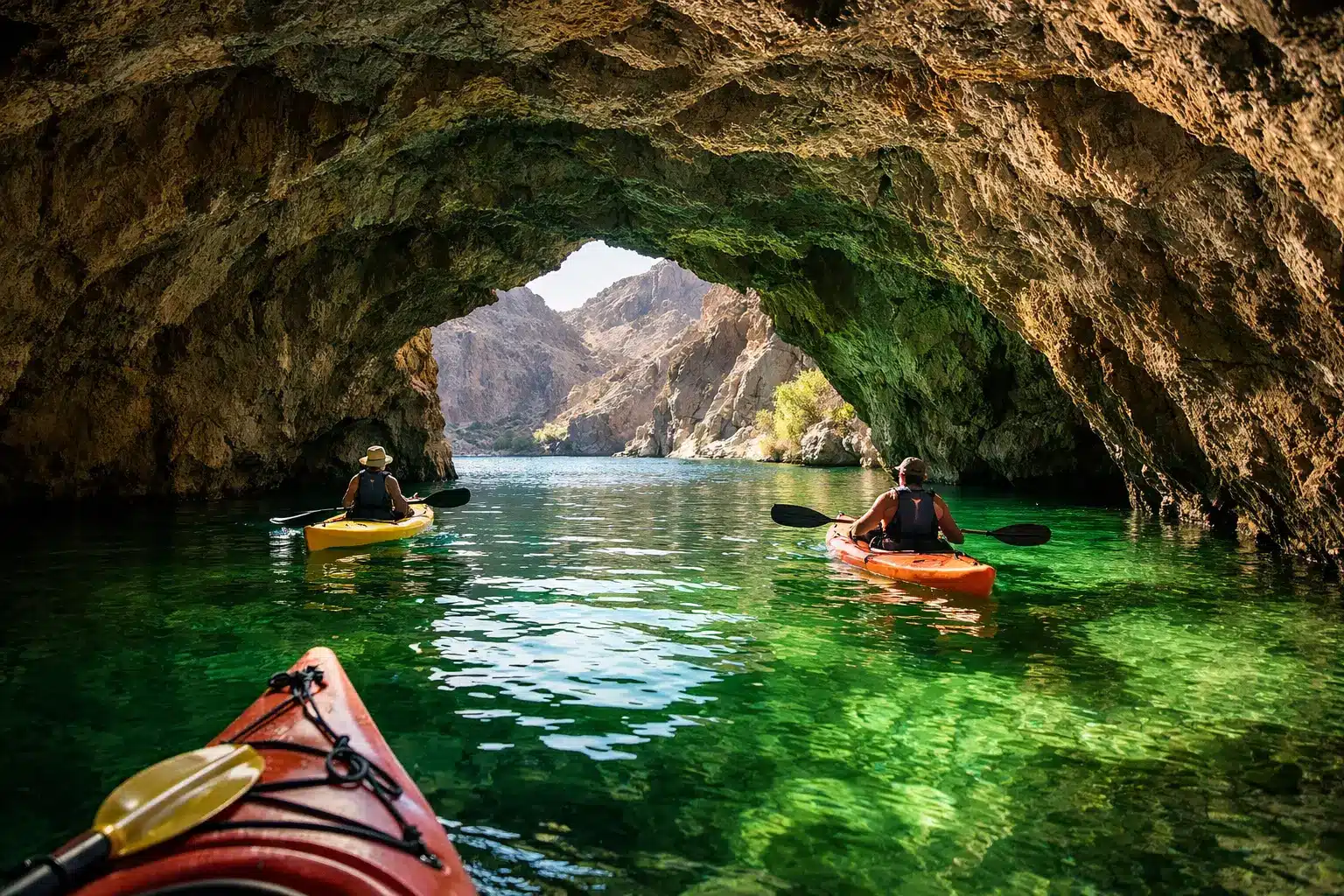
The water turns a striking green only when the sun and angle cooperate, but Emerald Cave is not a theme-park attraction with a paved path and a handrail. So, is Emerald Cave safe? For prepared visitors on a suitable day, yes, it can be a very enjoyable and manageable Colorado River outing. But it is still a paddling trip in a remote canyon environment, and the safest experience starts with an honest look at conditions, ability, and planning.
Near Willow Beach in Black Canyon, Emerald Cave is commonly reached by kayak or canoe on the Colorado River. The route is popular with first-time paddlers, families with older children, and visitors looking for a memorable outdoor experience beyond the casinos. Its approachable reputation is deserved, but only when guests respect the water, the weather, and the limits of their group.
Is Emerald Cave Safe for Beginners?
Emerald Cave can be suitable for beginners, particularly with a guided trip, because the water on this stretch of the Colorado River is generally calmer than open lake conditions. There are no whitewater rapids on the typical route from Willow Beach to the cave. That said, calm water is not the same as risk-free water.
The biggest challenge for many first-time kayakers is not technical paddling. It is stamina. Depending on the launch point and itinerary, the round-trip paddle can take several hours, and the return leg may feel tougher when wind picks up or arms get tired. A guest who is comfortable sitting in a kayak, following instructions, and paddling at an easy but steady pace will usually have a better time than someone expecting a quick photo stop.
Guided outings add an important layer of safety for beginners. A knowledgeable local guide can set a realistic pace, demonstrate paddling technique, watch changing conditions, keep the group together, and explain where to safely enter the cave. They also handle the navigation and logistics that can feel intimidating when you are trying to enjoy your first time on the river.
For independent paddlers, prior experience is helpful. You do not need to be an expert kayaker, but you should be comfortable steering, turning, getting in and out of a kayak, and managing your own energy for the full route.
What Actually Creates Risk at Emerald Cave?
The cave itself is small and usually not the main safety concern. Visitors typically paddle into a shallow rock alcove, where the water can reflect green light under favorable conditions. The larger risks come from exposure, changing weather, cold water, boat traffic, and poor preparation.
Cold Water Can Surprise Summer Visitors
Black Canyon may be hot and sunny, but Colorado River water released from Hoover Dam stays cold throughout the year. A capsize can quickly become serious if someone is not wearing a properly fitted life jacket or cannot get back into their boat. Even strong swimmers can be affected by cold water, fatigue, and the weight of wet clothing.
Wear a U.S. Coast Guard-approved personal flotation device at all times, not just when you think conditions look rough. Dress for the water temperature as well as the air temperature. In cooler months, avoid cotton layers that stay wet and cold, and ask your outfitter what clothing is appropriate for the season.
Wind Changes the Day Fast
Morning conditions can be glassy, while afternoon wind turns an easy paddle into a workout. Wind can push a kayak off course, create uncomfortable chop, and make the return journey much harder for children or inexperienced adults.
Starting early is often the smart move, especially in warmer months. Check the forecast before departure, but do not treat it as a guarantee. If wind is building, a responsible guide or rental operator may adjust the route, shorten the outing, or cancel. That is good judgment, not a spoiled vacation day.
Heat and Sun Exposure Matter as Much as Paddling
The canyon provides occasional shade, but much of the route is exposed. Desert sun reflects off the water, which means sunburn and dehydration can happen faster than visitors expect. Heat illness can make people dizzy, weak, confused, or nauseated – all poor conditions for being in a boat.
Bring more drinking water than you think you will need, use reef-safe sunscreen, wear a hat and sunglasses with a retaining strap, and pack a light long-sleeve sun shirt. Alcohol and kayaking are a bad pairing. Save the celebratory drink for after you are safely back on shore.
Boats, Shorelines, and the Cave Need Courtesy
Paddlers share the river with other kayakers, canoes, and occasionally motorized vessels. Stay alert, avoid blocking narrow areas, and keep a safe distance from larger boats. Near the cave, do not rush the entrance or crowd other groups trying to take photos.
The shoreline is rocky and can be slippery. Step carefully when launching, landing, or taking a break. Do not climb canyon walls or venture into unstable areas just to find a different photo angle. The best Emerald Cave photos are never worth a twisted ankle or a fall.
Who Should Think Twice Before Going?
Emerald Cave is not an all-day extreme expedition, but it is not the right fit for every traveler. People with serious mobility limitations, an unmanaged medical condition, or a strong fear of being on open water should consider whether a kayak trip will be comfortable. Guests who cannot wear a life jacket properly or follow basic safety directions should not participate.
Young children may be able to join certain family-friendly guided trips in a tandem kayak, subject to an operator’s age, size, and safety rules. Those requirements exist for good reasons, so confirm them before booking rather than assuming every child can go.
Swimming ability is valuable, but it is not the only measure of readiness. A non-swimmer may be able to participate on an appropriately managed guided outing with a life jacket and clear instructions, while a confident swimmer who ignores wind, hydration, or group direction can create a problem. Be candid with your guide about your experience level.
How to Make Your Emerald Cave Trip Safer
A safer day begins before you touch the water. Choose an outfitter with suitable equipment, clear safety procedures, and guides who know this particular stretch of river. Ask what is included, whether dry bags and drinking water are provided, what happens if weather changes, and how long you should expect to be on the water.
Arrive rested, eat before launching, and do not rely on a small bottle of water for a several-hour outdoor activity. Secure phones, keys, and medication in a dry bag. Tell a friend or family member your plan if you are paddling independently, and leave a reasonable margin of time before sunset.
Most importantly, listen when a guide says to turn around, stay close, or skip the cave due to conditions. The emerald glow is never guaranteed anyway. Light, time of day, water clarity, and the number of people inside the alcove all affect the experience. A great trip is measured by a safe paddle through Black Canyon, not by forcing one particular photo.
Why a Guided Trip Can Be the Better Choice
For visitors staying in Laughlin, arranging transportation, permits, gear, launch timing, and river navigation can turn a simple adventure into a long list of decisions. A guided small-group outing lets you focus on the canyon, wildlife, and the fun of paddling while someone experienced manages the details.
Desert Wonder Tours can be a good fit for guests who want local guidance and a more personal outing than a large group experience. A guide does more than point toward the cave. They help guests feel comfortable in the kayak, read the day’s conditions, and appreciate the stories and scenery that make Black Canyon special.
Emerald Cave is safest when treated with respect: wear the life jacket, start prepared, let conditions guide the plan, and choose support that matches your comfort level. Do that, and the journey to the green water can be one of the most rewarding ways to spend a day in the desert.