The best top Route 66 landmarks near Laughlin are not tucked behind velvet ropes. They are spread across a living stretch of desert highway where neon signs, mining stories, blacktop curves, old gas stations, and free-roaming burros still set the pace. For visitors looking for something to do beyond the casinos, this is one of Northwest Arizona’s most rewarding day trips.
A Route 66 outing from Laughlin can be shaped around how you like to travel. Some guests want an easy history-and-photos day with Kingman and Oatman as the anchors. Others want the full mountain-road experience over Sitgreaves Pass, with plenty of time for roadside stops. The route is scenic, but it is not a drive to rush.
Top Route 66 landmarks for a memorable desert day
1. Kingman Powerhouse Visitor Center
Start in Kingman, one of Arizona’s most useful Route 66 hubs. The restored Powerhouse is a landmark in its own right, built in 1907 to provide electricity for the town’s rail and mining operations. Its brick exterior and tall smokestack make a strong first photo stop, but the real value is orientation: this is where Route 66’s national story and Kingman’s local story begin to connect.
Inside, visitors can get a clearer picture of the road’s evolution from a working transportation corridor to an American travel icon. It is especially worthwhile for first-time Route 66 travelers who want context before heading into the smaller, more eccentric stops farther west.
2. Arizona Route 66 Museum
Located within the Powerhouse, the Arizona Route 66 Museum puts the highway into perspective. Exhibits trace travel in the region from Native American trade routes and wagon roads through the railroad era, the rise of the Mother Road, and the interstate years that changed it all.
This stop adds substance to a route that can otherwise feel like a string of fun photo opportunities. Give yourself enough time to read the displays rather than racing through. It makes the historic road outside feel much more immediate.
3. Historic Downtown Kingman
Downtown Kingman has the bones of a real railroad town, not a movie-set version of one. Historic buildings, murals, diners, and Route 66 signs make it an easy place to stretch your legs, grab a cold drink, and take photos before the landscape opens up.
Look closely and you will see how the railroad, mining, and highway all helped shape this community. Kingman is also a practical stop for restrooms, fuel, and food. That matters before you continue toward the mountains, where services become more limited.
4. Locomotive Park
Just outside the Powerhouse, Locomotive Park features the steam locomotive known as Santa Fe 3759. It is a quick stop, but a fitting one. Route 66 may get the headlines, yet the railroad was central to the growth of communities across northern Arizona.
The locomotive gives families a simple, hands-on-feeling photo stop, while history fans will appreciate the reminder that the road was never the only route through the desert. Kingman developed where transportation, commerce, and opportunity met.
5. Route 66 Shields and Kingman Murals
Some of the best Route 66 moments are small: a painted highway shield beneath your feet, a weathered motel sign, or a mural that turns a blank wall into a snapshot of the road’s past. Kingman’s downtown photo spots are worth seeking out because they capture the spirit visitors expect from Route 66 without requiring a long detour.
Take a few minutes to wander rather than treating every stop as a parking-lot photo. The old storefronts, vintage details, and local businesses are part of what keeps this stretch feeling lived-in.
6. Cool Springs Station
West of Kingman, Cool Springs Station sits in a dramatic desert setting near the base of the Black Mountains. The original station served motorists on Route 66 before fire destroyed it in the 1960s. The building seen today was carefully reconstructed, preserving the look and roadside character that made the stop memorable.
This is where the trip starts to feel distinctly cinematic. Rugged slopes rise around the road, the desert seems larger, and the highway narrows into the mountain route ahead. Stop for photos, browse the souvenirs if open, and appreciate that a station this remote once welcomed generations of road-trippers.
7. Sitgreaves Pass
Sitgreaves Pass is one of the most unforgettable stretches of historic Route 66 in Arizona. The road climbs and twists through the Black Mountains, revealing broad desert views and a landscape that explains why early motorists considered this a serious journey.
It is beautiful, but it demands attention. The road is narrow and winding, with sharp curves and limited room to pull over. Large vehicles and drivers uncomfortable with mountain roads may prefer a guided trip or a route that avoids the pass. When conditions are good, though, this drive is a highlight that no museum can replicate.
8. The Roadrunner at the Pass
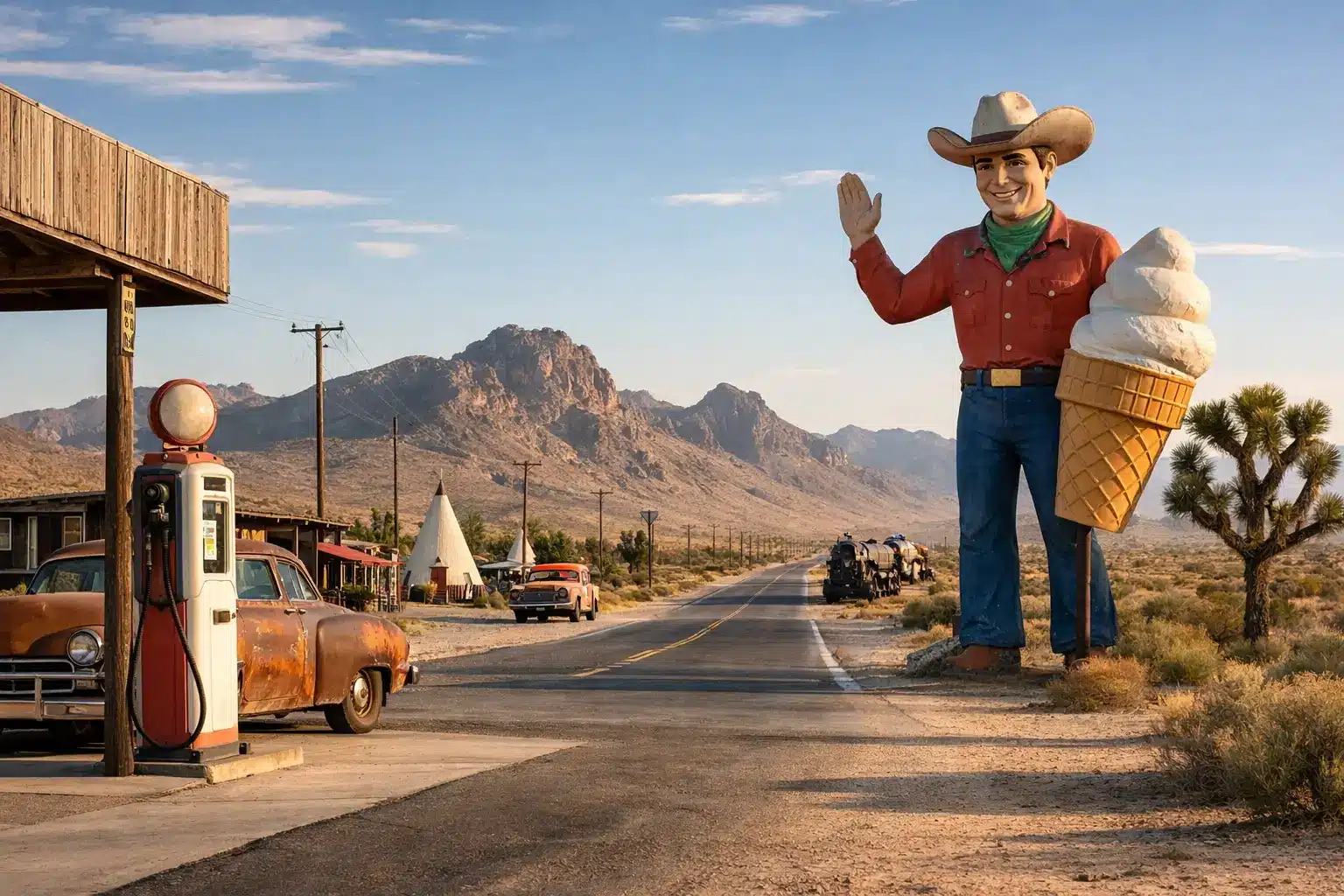
Near the high point of Sitgreaves Pass, the roadside roadrunner sculpture is a cheerful landmark with a big view. It is a short stop, but it captures a familiar Route 66 tradition: quirky attractions that reward travelers for slowing down.
On a clear day, the overlook gives you a chance to see how quickly the terrain changes between the Colorado River valley and the rugged mountains. Keep an eye on weather, especially during summer monsoon season, when rain and lightning can move in fast.
9. Oatman Ghost Town
Oatman is the star attraction for many Route 66 travelers, and it earns that reputation. This old mining town clings to the mountainside with wooden boardwalks, historic storefronts, saloons, and a lively frontier atmosphere. It feels less polished than a theme park and more like a town that found a second life through the visitors who love its past.
The town’s gold-mining boom faded long ago, but its personality did not. Browse shops, enjoy lunch, and give yourself time to take in the buildings, hillsides, and colorful characters. Oatman can be busy in peak season, so a weekday or earlier arrival usually makes for a more relaxed visit.
10. Oatman’s Wild Burros
Oatman’s wild burros are often the most talked-about part of the day. Descended from the burros used by miners, they wander through town and have become local celebrities. Seeing one stroll past a historic storefront is the kind of Route 66 memory that people bring home.
Give them space, watch children closely, and follow posted guidance about feeding. Never offer human snacks, and remember that even friendly-looking animals can bite or kick if startled. A respectful encounter is better for both visitors and burros.
11. The Oatman Hotel
The Oatman Hotel, with its weathered exterior and old-west appeal, is another essential stop on the main street. It is famously associated with Clark Gable and Carole Lombard, who reportedly spent time there after their 1939 wedding. Whether you come for that Hollywood connection or simply to see one of the town’s most recognizable buildings, it is a classic photo opportunity.
This is also a good reminder that Route 66 was always about more than getting somewhere. It was about stopping somewhere memorable along the way.
12. Topock and the Colorado River Crossing
At the western end of Arizona’s Route 66 story, the Topock area brings the desert road back to the Colorado River. The historic bridge crossing and surrounding marshland offer a different kind of scenery from the mountains and mining towns. It is a peaceful finish if you are looping back toward Laughlin or Bullhead City.
This portion of the route is ideal for travelers who want to pair Route 66 history with river views and a gentler drive. Depending on the season and your schedule, it can be a welcome contrast after Oatman’s busy main street and Sitgreaves Pass’s tight curves.
How to plan the Route 66 day trip
For most visitors, the best route is Kingman, Cool Springs, Sitgreaves Pass, Oatman, then Topock before returning toward Laughlin. Plan on a full day if you want time for museums, lunch, photos, and unhurried wandering. A half-day can work for Kingman and Oatman, but you will be choosing highlights rather than experiencing the road at its best.
Bring water, sun protection, comfortable shoes, and a charged phone or camera. Cell service can be inconsistent in the mountains, and desert temperatures can be surprisingly different between the river valley and higher elevations. Fuel up before leaving Kingman, particularly if you plan to cross the pass.
A guided small-group experience can be a smart choice for travelers who would rather enjoy the views than navigate mountain curves, parking, timing, and changing road conditions. Desert Wonder Tours can make the day feel personal while adding the local stories that turn each stop from a photo into a memory.
Leave room in your schedule for the unexpected: a burro crossing the street, a conversation with a shop owner, or a desert overlook that deserves five more minutes. That is how Route 66 is meant to be experienced.