The best Oatman wild burro photo stops are rarely the ones you plan down to the minute. A burro may be standing in the middle of historic Main Street one moment, then wandering behind a weathered storefront or down a side street the next. That unpredictability is part of Oatman’s charm – and the reason a little local know-how makes such a difference.
For visitors looking for something memorable beyond the casinos, Oatman offers an easygoing Route 66 experience with real character: wooden sidewalks, old mining-town facades, mountain scenery, and free-roaming burros that have become the town’s unofficial welcome committee. The goal is not to chase wildlife from one spot to another. It is to slow down, watch respectfully, and be ready when a classic Route 66 scene comes together.
Where to Find the Best Oatman Wild Burro Photo Stops
Historic Main Street for the classic Oatman portrait
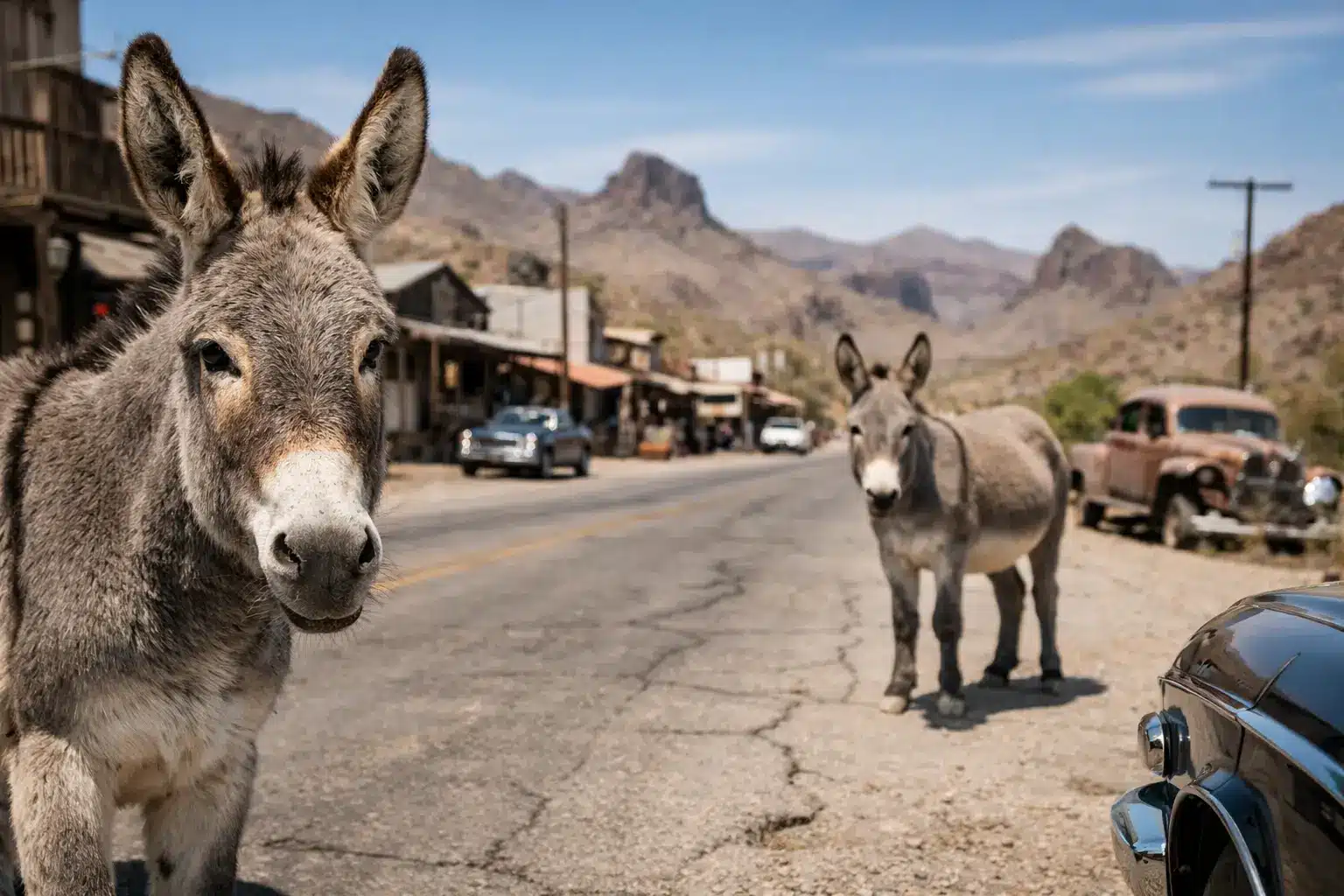
If you want the image most people picture when they think of Oatman, start on Historic Route 66 through the center of town. Burros often wander along the street and boardwalks, with vintage signs, false-front buildings, and the rugged Black Mountains behind them. A burro standing near an old saloon or wooden storefront gives you the unmistakable Oatman frame without much effort.
The trade-off is that Main Street can be busy. Cars move through town, visitors gather quickly when a burro appears, and an otherwise great photo can become crowded. Instead of stepping into the street or closing in on an animal, take a few steps back and use the street’s lines, storefronts, and mountain backdrop to tell the story. A wider photo often feels more authentic than a tight close-up.
Look for a spot where you can stand on the boardwalk or safely off the roadway. Be patient. When a burro pauses, lowers its head, or looks toward the camera, take several shots rather than waiting for one perfect pose.
The quieter edges of town
Burros do not follow a schedule, and they are not always gathered in the busiest block. The quieter areas near the entrances to town can provide more breathing room and fewer people in the background. These moments can be especially good for photos that show the burro within the desert landscape rather than as the center of a crowd.
Keep expectations realistic. You may find one burro, several, or none at a particular edge of town. That is why Oatman works best as a relaxed stop on a larger Route 66 day trip rather than a rushed photo mission. Give yourself time to browse, enjoy the historic atmosphere, and let the animal sightings happen naturally.
Route 66 scenery outside the storefronts
The drive through the Black Mountains is part of the experience. Around Oatman, Route 66 bends through rocky terrain and offers expansive views that make a strong setting for landscape photos. If burros are visible from a legal, safe pull-off or from within town, the contrast of a sturdy little animal against wide-open desert country can be striking.
Never stop in a travel lane, on a blind curve, or anywhere that creates a hazard for other drivers. The mountain road demands attention, especially during busy periods. Scenic photographs are not worth a risky parking decision, and no one should approach a burro near traffic.
Time Your Visit for Better Light and Fewer Crowds
Morning usually offers the most forgiving light for Oatman photos. The sun is lower, the desert colors are warmer, and Main Street may feel more relaxed before the day’s heaviest visitor traffic. Late afternoon can also be beautiful, particularly when the mountains begin to pick up softer light.
Midday is often the most challenging time for photography. Bright Arizona sun can create hard shadows under hats, storefront awnings, and the burros’ faces. If midday is when your itinerary brings you to Oatman, use the shade from buildings for close portraits and save the wide desert scenes for a more open, evenly lit view.
Season matters, too. Cooler months are comfortable for walking the boardwalks and spending time outdoors. Summer visits are still possible, but heat changes the rhythm of the day. Bring water, wear sun protection, and build in time to cool off between stops. The burros decide where they want to be, regardless of the weather or your preferred photo schedule.
Photograph Burros Without Turning the Moment Into a Problem
Oatman’s burros are accustomed to people, which can make them seem more approachable than they are. They are still animals with their own space, moods, and reactions. The best photos come from respectful distance and calm behavior, not from trying to direct the scene.
Give a burro room to walk, especially if it is moving through town or has young nearby. Do not corner one between vehicles, storefronts, or groups of people. Avoid sudden movements, loud calls, flash photography, and attempts to touch or hug the animals. A curious burro can step forward quickly, and a person crowding it can create stress for both animal and visitor.
Food is another area where good intentions can go wrong. Do not offer human snacks, and do not assume every food item is appropriate. If you choose to participate in Oatman’s long-standing burro-feeding tradition, follow current local guidance and use only suitable food available from local businesses. Keep fingers clear, follow posted instructions, and remember that a photo opportunity should never come before safe animal behavior.
For families, assign one adult to watch the surroundings while another takes the picture. Young children should stay close, remain quiet, and never run toward a burro. These simple habits lead to better photos because everyone is relaxed.
A Simple Photo Plan That Still Leaves Room for Surprise
A successful Oatman stop does not require a professional camera. A phone works beautifully when you use the setting well. Start with one wide shot that includes the road, storefronts, and mountains. Then take a medium-distance portrait of the burro with a recognizable Oatman detail behind it. Finally, watch for small story moments: a burro’s ears framed against an old sign, hoofprints near the boardwalk, or a quiet pause beside a weathered building.
Use portrait mode carefully. It can create an attractive background blur, but it sometimes clips ears or softens the edges of a burro’s coat in odd ways. Take one portrait-mode image, then take a standard photo as backup. When the animal is moving, use your phone’s burst feature or take several quick frames.
Keep the camera at your own eye level or slightly lower by bending your knees, not by getting too close. This gives the burro a stronger presence in the image while preserving a comfortable distance. It also helps to leave some open space in the direction the animal is looking or walking.
Turn the Photo Stop Into a Better Day Trip
Oatman is more satisfying when it is not the only thing on the schedule. Pair the town with scenic Route 66 driving, a view of the Arizona Joshua Tree Forest, or time to explore the Bullhead City and Laughlin area before or after your visit. That approach takes pressure off the burro sighting and turns the day into a fuller desert adventure.
Visitors departing from Laughlin especially appreciate having transportation and a knowledgeable local guide for this kind of outing. The roads, photo timing, parking choices, and town rhythm are easier to enjoy when someone else is handling the route. Desert Wonder Tours builds Oatman and Route 66 experiences around those details, leaving guests free to watch for burros and enjoy the scenery.
Bring a charged phone, sunglasses, water, and shoes comfortable enough for uneven boardwalks and short walks. Most of all, bring patience. The best Oatman photo may not be the first burro you see, but the quiet moment when one pauses in front of a piece of Route 66 history and makes the town feel exactly as memorable as you hoped it would.