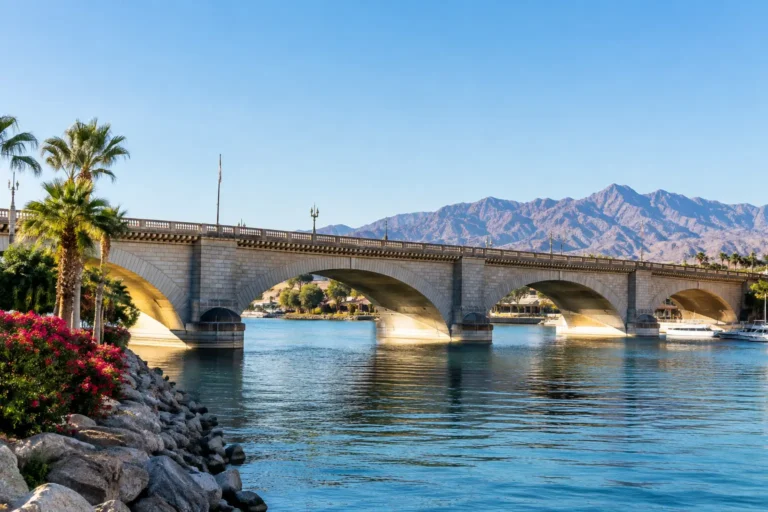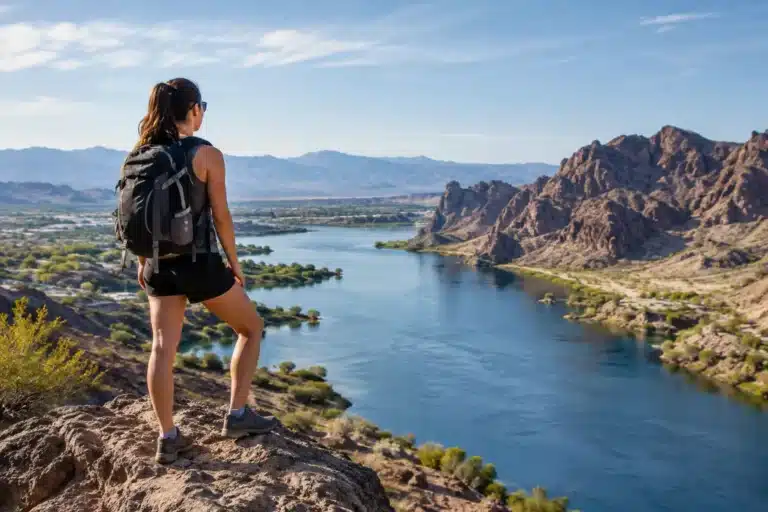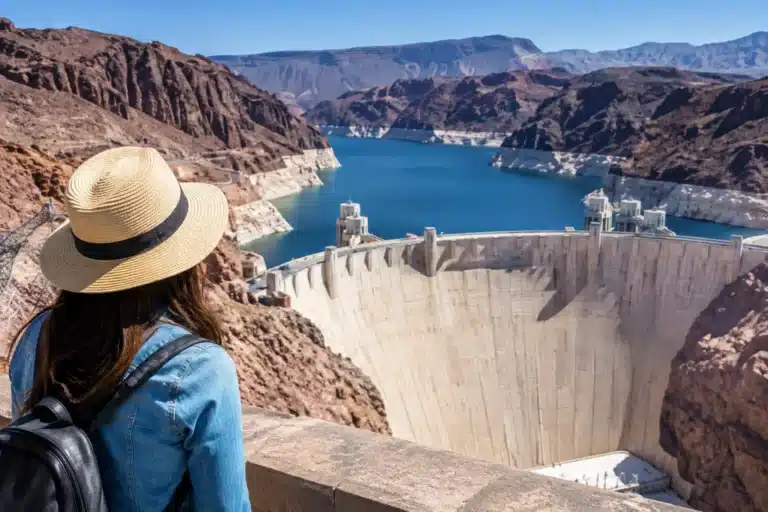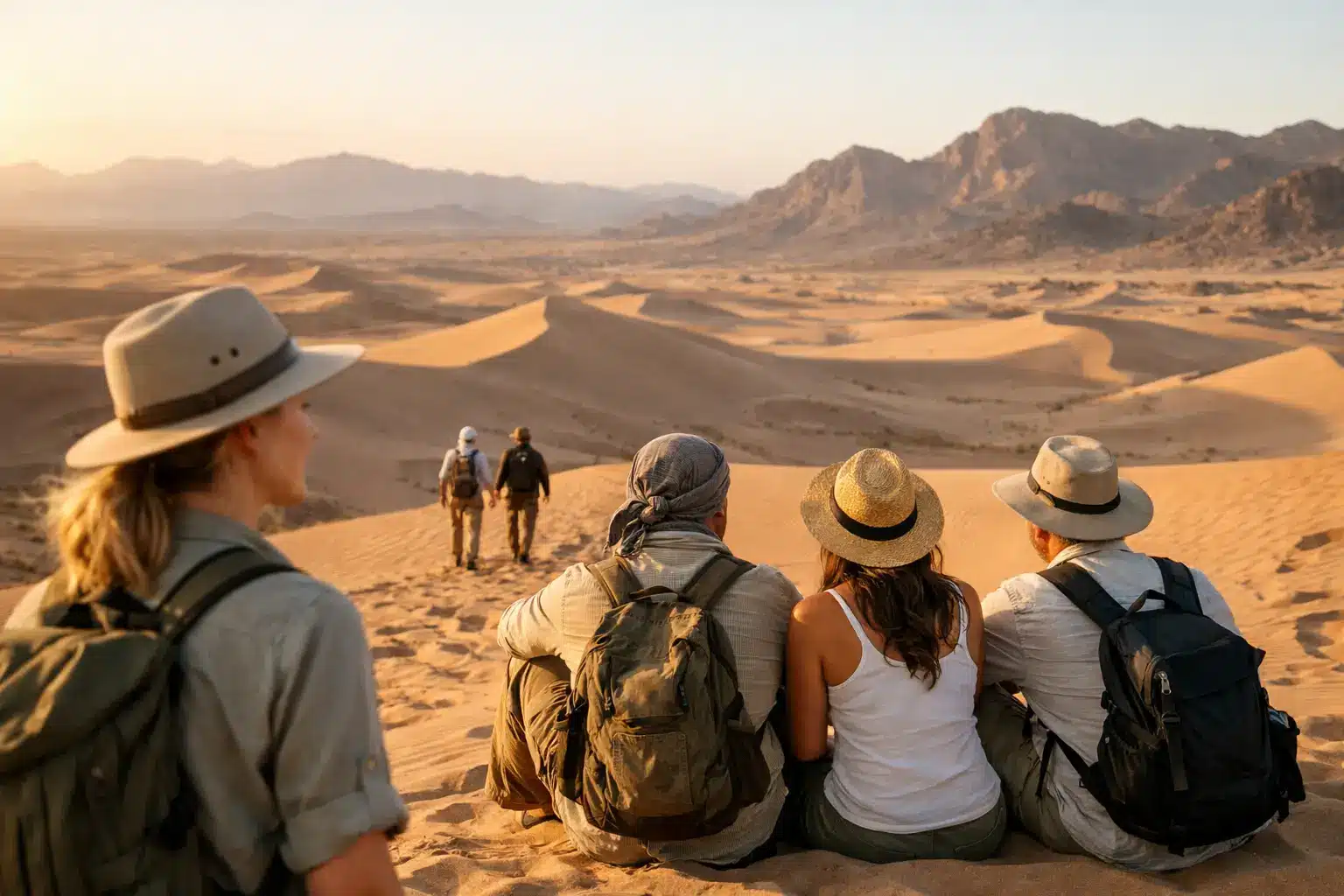
A desert day trip can look simple on a map: get in a vehicle, drive toward the canyon, dam, ghost town, or river, and take a few photos. In practice, the small group desert travel benefits show up in the moments between the landmarks. They are the difference between watching the landscape through a bus window and having time to ask why the hills change color, where to spot bighorn sheep, or which roadside stop is actually worth your time.
For visitors based in Laughlin, Bullhead City, Lake Havasu City, or Kingman, a small-group tour can turn a free day into a well-paced regional experience. You still get the big views, but with more room for local stories, easier logistics, and a guide who can pay attention to the people in the vehicle.
1. You spend less of the day waiting
Large motorcoach trips serve a purpose, especially for travelers looking for the lowest-cost option or a highly structured itinerary. But moving a crowd takes time. Boarding, head counts, restroom stops, meal breaks, and regrouping at every attraction can eat into a day quickly.
A smaller van-based group is simply easier to move. Hotel pickup tends to feel more personal, getting on and off the vehicle is faster, and the guide can keep the day flowing without rushing everyone through the experience. That matters on routes where every extra minute can mean a longer overlook stop, a better lunch break, or a chance to linger when the light is especially good.
The goal is not to pack in stops for the sake of a busy schedule. It is to make the time between stops feel useful, comfortable, and part of the adventure.
2. Local questions get real answers
The Mojave Desert is not empty space between attractions. It is full of mining history, volcanic terrain, old travel corridors, wildlife habitat, and communities with stories that do not fit on a standard brochure.
In a small group, it is easier to have a real conversation with the guide. Ask why Oatman’s burros roam the streets, what made Route 66 so significant to the region, how Hoover Dam changed the Southwest, or when desert plants are most likely to bloom. A knowledgeable local guide can adjust the conversation to what your group is noticing rather than delivering the same speech to rows of passengers.
That personal access is especially valuable for first-time visitors. You do not need to arrive with a detailed plan or a list of geology questions. Curiosity is enough. Good guiding gives the scenery context, which often becomes the part people remember long after the photos are posted.
3. Small group desert travel benefits include a better pace
The desert rewards travelers who are willing to slow down. A quick pull-off may reveal a wide view across the Black Mountains. A short walk can lead to a quiet canyon angle that most passing drivers miss. A few extra minutes near sunset can change an ordinary scene into something memorable.
Small groups are better positioned for that kind of pacing. Your guide still works within the tour schedule, road conditions, attraction hours, and safety requirements, but there is often more breathing room than on a large coach itinerary. If the group is engaged at a scenic viewpoint, the experience does not always have to end the instant a stopwatch says so.
Flexibility has limits, and that is a good thing. No responsible operator should promise detours that conflict with park rules, weather concerns, or the need to get guests back on time. Still, a small group creates more opportunity to respond thoughtfully to the day instead of treating every stop like an assembly line.
4. The ride is part of the comfort
Desert distances can surprise people. Grand Canyon West, Hoover Dam, Route 66 towns, and Arizona’s scenic backroads each require time on the road. Transportation should be more than a necessary inconvenience between photo stops.
A comfortable small-group vehicle gives travelers space to settle in, look out the windows, and enjoy conversation without the feeling of being carried along with a crowd. For couples, families, solo visitors, and friends traveling together, that can make a full-day tour feel far more relaxed.
It also removes several common day-trip headaches: unfamiliar highways, desert driving fatigue, parking, navigation, and deciding who has to stay alert while everyone else enjoys the view. With hotel pickup available on many regional tours, the day can begin without the stress of finding a meeting point or loading everyone into multiple cars.
For guests who would rather be passengers than planners, that convenience is a major benefit.
5. Your guide can notice what you need
Great hospitality is easier in a smaller group. A guide can more readily see when someone needs a water break, wants help getting a photo, has a question about walking distance, or is unsure what to expect at the next stop.
This does not mean every tour is right for every traveler. Anyone with mobility concerns, young children, dietary needs, or a tight return-time requirement should always review the tour details before booking. Some experiences involve uneven ground, heat exposure, age minimums, optional walks, or a longer day than guests expect.
But small groups make communication more natural. You can tell the guide what matters to you, whether that is wildlife, history, photography, a comfortable lunch stop, or simply seeing as much as possible without feeling hurried. On private and custom outings, that personal attention can go even further, allowing the route and pacing to better match your group.
6. The experience feels more connected
Travelers do not have to arrive together to enjoy a small group. Many solo guests appreciate the easy social atmosphere, while couples and families often enjoy sharing a moment with fellow visitors who are equally excited to be there.
A small group can create the kind of conversation that rarely happens on a packed bus: swapping restaurant ideas, comparing favorite viewpoints, helping each other take photos, and laughing over an unexpected burro encounter in a Route 66 town. The guide is not just managing a passenger count. They are hosting a day.
That sense of connection matters in a region built around big landscapes. The Colorado River, desert mountains, historic highways, and wide-open skies naturally invite people to look up and pay attention. A more intimate tour setting makes it easier to do exactly that.
7. You can choose an outing that fits your kind of fun
Not every desert traveler wants the same day. Some guests want an iconic sightseeing route with Hoover Dam or Grand Canyon West. Others are looking for something beyond the casino floor: a Route 66 adventure, a visit to the Arizona Joshua Tree Forest, a wildlife-focused outing, a kayak experience, or an evening of wine and stargazing.
Small-group operators are often able to offer more variety because they are not building every day around a single massive bus route. That opens the door to themed experiences and multi-stop itineraries that combine scenery with food, history, outdoor activity, or local culture.
Desert Wonder Tours builds its regional experiences around that idea: limited seating, local guiding, and itineraries designed to help visitors see more than one postcard view. The best option depends on your available time, activity level, and what you want to remember most from the trip.
A half-day tour may be ideal if you want a relaxed taste of the area. A full-day outing makes more sense when you are ready to travel farther and let someone else handle the details. If you are celebrating, traveling with multiple generations, or have a very specific wish list, a private or custom experience may be worth considering.
The desert is at its best when it feels personal rather than rushed. Choose the outing that leaves room to look around, ask questions, and let the road reveal something you did not expect.