The desert does not wait for anyone’s camera settings. In the final hour before sunset, the color can shift from pale gold to copper, rose, and deep violet in minutes. A sunset desert photo tour gives you a comfortable way to be in the right place when that change happens, without spending your vacation deciphering remote roads, rushing back after dark, or wondering which overlook actually faces the light.
For visitors looking for something memorable to do beyond the casino floor, this is a chance to see the Mojave landscape at its most cinematic. You do not need to be a professional photographer. You only need a little curiosity, a charged phone or camera, and enough time to slow down when the desert starts showing off.
Why sunset changes the desert
Midday is excellent for seeing distance, mountain layers, and the crisp geometry of the desert. It is not always the most forgiving light for photographs. The sun is high, shadows are hard, and pale rock can appear washed out. Near sunset, lower-angle light brings out texture in volcanic hills, Joshua trees, desert washes, and weathered roadside landscapes.
That softer light also creates a stronger sense of scale. A lone ocotillo, an old Route 66 sign, or a ridgeline that felt ordinary an hour earlier can become the center of a frame. The landscape has more contrast, but the contrast is often warmer and easier to photograph than bright noon sun.
There is a practical reason to travel with a guide, too. Good sunset locations are about more than a pretty view. They need a safe place to pull over, room to move without stepping on fragile vegetation, a clear sightline toward the western horizon, and enough time to settle in before the best color arrives. Local guides watch seasonal sunset times, road conditions, cloud cover, and the changing character of each route.
What a sunset desert photo tour feels like
A well-planned evening tour is not a race from one photo stop to the next. It is a paced outing with scenic drives, a few carefully chosen locations, and time to look around rather than simply collect snapshots. Desert Wonder Tours keeps the experience personal with small-group and private options, comfortable van transportation, and local hosts who know when to share a story and when to let the view speak for itself.
Depending on the route and season, an itinerary may include wide-open desert terrain, mountain backdrops, Joshua tree country, historic roadside character, or quiet viewpoints outside the usual daytime crowds. Some evenings offer dramatic skies. Others deliver a clean, glowing horizon and long shadows across the ground. Both can make outstanding photographs.
Expect hotel pickup where offered, so you can enjoy the evening without assigning someone to drive unfamiliar roads after dark. That matters more than many travelers realize. Desert roads can be beautiful, but signage is limited in places, cell service can vary, and nighttime navigation is best left to someone who knows the area.
Golden hour is only part of the show
The most popular photographs often come before the sun disappears, but do not pack up when it drops below the horizon. The 15 to 30 minutes afterward can bring the richest color of the night. This is known as the blue hour, when the sky cools to blue while the remaining light lingers on distant peaks and desert rock.
If conditions are clear and the itinerary runs late enough, the transition into darkness can be a reward of its own. Far from city glare, even a short pause to look up can reveal more stars than visitors expect from this corner of Nevada and Arizona. Stargazing is always weather-dependent, and moonlight can soften faint stars, but a guide can help you recognize when the sky is worth photographing and when it is simply worth enjoying.
Bring the gear you already use
A sunset desert photo tour is not a technical photography class, and expensive equipment is not required. Modern phones handle desert color remarkably well. Clean the lens before leaving, turn on the grid in your camera settings, and tap the brightest area of the screen to avoid an overexposed sky. If your phone offers a night mode, save it for after sunset and hold the device very still.
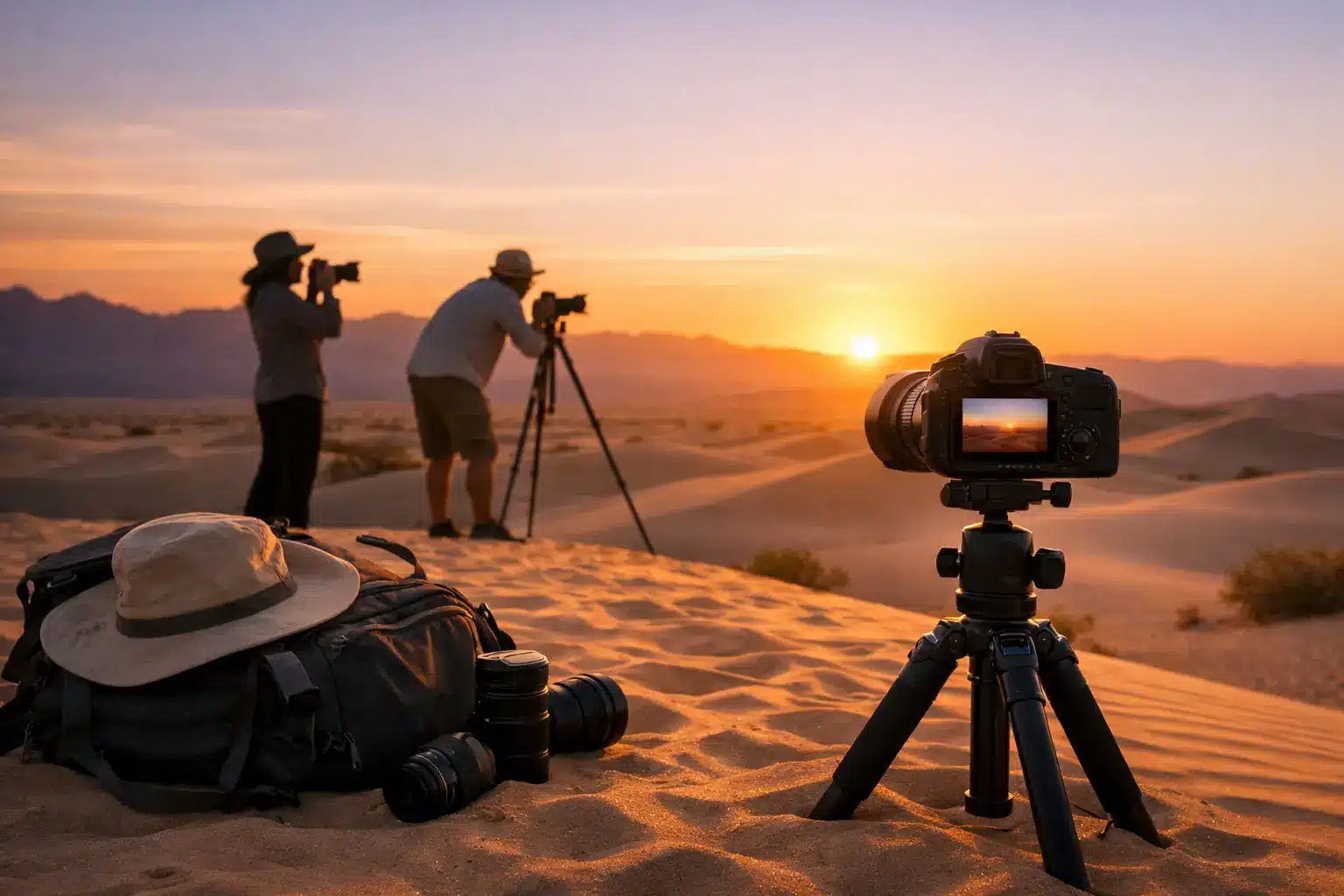
Camera users will appreciate a wide lens for expansive views and a short zoom for isolating a ridge, moon, or distant tree. A tripod is useful after sunset, especially for star photos, but it is not essential for every guest. Ask ahead if you plan to bring a larger setup so there is room to transport it safely and use it respectfully at stops.
The most useful items are often the least glamorous: water, closed-toe shoes, a light jacket, sunglasses for the drive out, and a small flashlight with a red-light setting if you have one. Desert temperatures can fall quickly once the sun is down, even after a hot afternoon. Avoid bright white flashlights around other guests who are taking long exposures or adjusting to the dark.
How to get better photographs without slowing down the group
The strongest desert photos usually have a clear subject. Instead of trying to capture every mile of scenery in one image, look for a foreground element: a Joshua tree silhouette, a winding road, patterned stone, or the edge of a shadow crossing the sand. Place it low in the frame and let the sky carry the color above it.
Try more than the obvious horizon shot. Turn around when the sun is low. The light behind you may illuminate mountains, roadside details, or faces with a warm glow. Shoot a few vertical images for sharing, then step back and make a wider horizontal frame that shows the setting. If you are traveling with friends or family, take a photo of them in the landscape rather than only photographing the landscape itself. A small human figure helps show just how vast the desert feels.
Courtesy makes the experience better for everyone. Keep voices low when the group is photographing, avoid walking into another guest’s frame, and give each location a few patient minutes before moving on. The desert rewards observation. Sometimes the best image happens after the first burst of excitement has passed.
Choosing the right evening tour
The best option depends on what you want from the outing. A small-group sunset experience is a smart fit for couples, solo travelers, and friends who want a social evening with easy logistics. A private tour is often better for photographers who want more time at specific subjects, families with different pace needs, or visitors celebrating an occasion.
Season matters as well. Summer sunsets come later and the days can be very hot, so shade, hydration, and a lighter pace are especially valuable. Fall through spring often offers milder temperatures and earlier sunset times, which can work well for visitors planning dinner afterward. Cloud cover is the wild card. A perfectly clear sky can produce a clean, classic sunset, while scattered clouds may create the most dramatic color of all.
Wildlife sightings are possible, particularly near quieter stretches of desert, but they should never be promised or pursued. The goal is to experience the landscape responsibly. Stay on established areas, do not pick plants or move rocks for a composition, and keep a respectful distance from any animal you encounter.
Make the evening part of your Laughlin getaway
A sunset tour fits naturally into a day that might otherwise end at the hotel pool or gaming floor. Spend the morning at leisure, enjoy an early meal, then head out as the heat eases and the scenery becomes more dramatic. It is an easy choice for visitors who want a real sense of place without committing to a demanding hike or a full-day drive.
Before booking, confirm the departure location, total duration, pickup details, minimum age guidance, and what is included. Let the tour team know if you have mobility considerations, are traveling with children, or want to bring photography equipment beyond a phone or small camera. A little planning helps your guide shape the experience around what matters most to you.
When the last light fades, resist the urge to judge the evening only by what is on your camera roll. Put the camera down for a minute, breathe in the cooling air, and watch the desert turn quiet. That is often the moment guests remember long after the color has left the sky.