The road east of Laughlin leads to two of the Southwest’s biggest names, but they offer very different kinds of wow. If you are choosing Lake Mead or Hoover Dam, the right answer depends on whether you want to linger in open desert-and-water scenery, stand beside a working engineering landmark, or fit both into one memorable day trip.
Here is the local truth: you do not have to treat it as an either-or decision. Lake Mead and Hoover Dam sit close enough together to pair naturally, yet each deserves its own moment. The best itinerary gives you enough time to appreciate the scale of the dam and the surprising beauty of the lake without turning the day into a rushed series of photo stops.
Lake Mead or Hoover Dam: Start With Your Travel Style
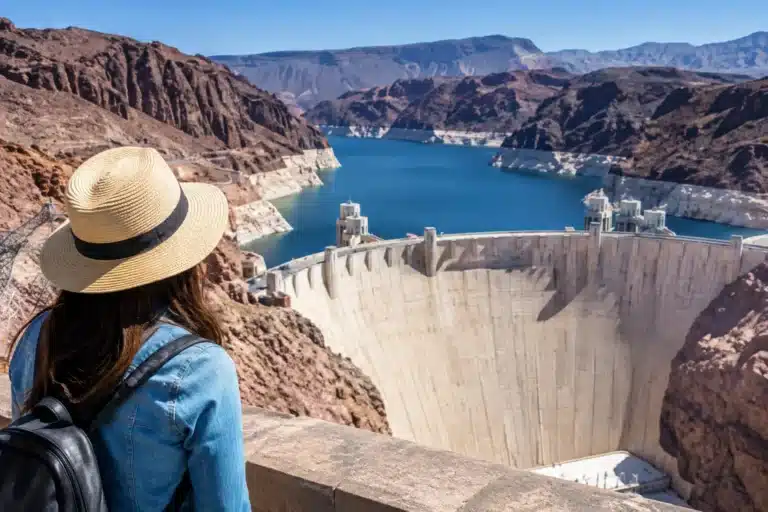
Hoover Dam is for travelers who want a story. You arrive at a massive concrete structure that changed the Southwest, created one of the country’s largest reservoirs, and still produces hydroelectric power. It is an impressive place to see with your own eyes, especially when a local guide can point out the Colorado River, the Arizona-Nevada state line, the intake towers, and the surrounding Black Canyon landscape.
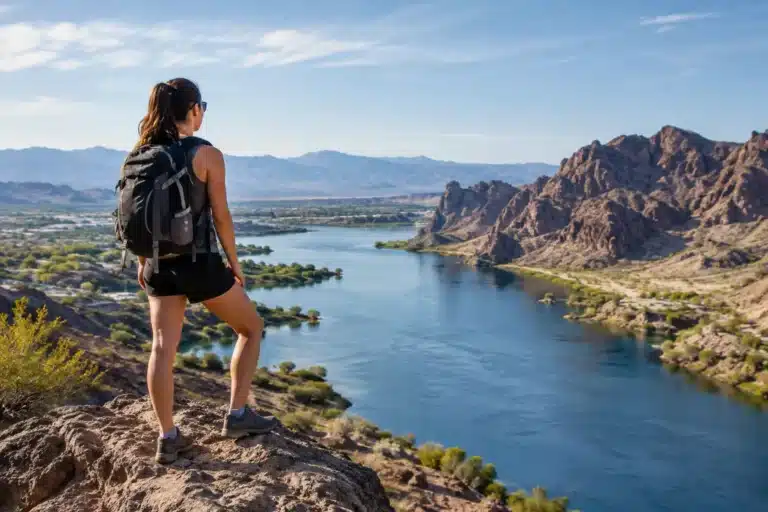
Lake Mead is for travelers who want room to breathe. The lake’s coves, blue water, volcanic hills, and wide-open views feel like a change of pace from casino lights and busy resort corridors. Depending on the season and the route, a Lake Mead outing can lean scenic, active, relaxed, or all three. It is a strong choice for travelers who would rather spend time outdoors than inside an attraction.
Choose Hoover Dam if you enjoy history, architecture, engineering, and landmark photos. Choose Lake Mead if you are drawn to desert landscapes, water views, wildlife, or a slower scenic drive. Choose both if this may be your one chance to experience this remarkable stretch of the Colorado River.
What You Experience at Hoover Dam
Few structures make visitors stop talking for a moment. Hoover Dam is one of them. Built during the Great Depression, it required extraordinary labor, planning, and determination in one of the harshest climates in the country. Seeing the dam from the top helps put its scale into perspective, but the views outward are just as compelling: Lake Mead stretching north, the Colorado River winding through Black Canyon below, and steep desert walls rising around it all.
A visit can be as simple as a scenic overlook and a walk across the dam, or it can include a more detailed look at the visitor area when access and operating schedules allow. Conditions can change due to security procedures, weather, special events, or construction, so it pays to plan with flexibility rather than building a tight schedule around one stop.
The Mike O’Callaghan-Pat Tillman Memorial Bridge overlook is another standout. From there, you see Hoover Dam from above and understand why this crossing became such an iconic photo location. It is a worthwhile stop for guests comfortable with a short walk and big views.
Hoover Dam is often a particularly good fit for multigenerational groups. Grandparents appreciate the history, kids are fascinated by the size of it, and everyone gets a photo that proves they stood at one of America’s great landmarks. Just keep in mind that the area can be hot, bright, and breezy. Water, sun protection, and comfortable walking shoes make a real difference.
Best for a Half-Day Landmark Visit
If your vacation schedule is packed, Hoover Dam is the easier choice for a focused half-day experience. It delivers a lot in a relatively compact visit. You can enjoy the views, learn the story, and still be back in Laughlin for a poolside afternoon, dinner, or evening show.
What You Experience at Lake Mead
Lake Mead National Recreation Area delivers the kind of scenery that makes you roll down the window. The lake is enormous, and its shoreline changes character from one viewpoint to the next. One moment, you may be looking across calm water toward layered desert mountains. Around the next bend, the terrain becomes rocky, rugged, and distinctly Mojave.
This is where Lake Mead wins for travelers who want to feel connected to the landscape. There is room for scenic stops, shoreline views, picnics, wildlife spotting, and, on the right outing, time on the water. You may see birds along the shoreline, desert plants adapting to the heat, and a horizon that seems to keep going.
Lake Mead is also a better match for travelers seeking an active experience. Kayaking, boating, hiking, and other outdoor activities can turn a sightseeing day into an adventure. The exact options depend on the season, water conditions, weather, and your group’s comfort level. Summer brings long days and warm water, but also intense heat. Spring and fall usually offer the most comfortable temperatures for combining outdoor time with sightseeing.
Best for Scenery, Water, and a Slower Pace
A Lake Mead visit rewards travelers who are willing to slow down. Instead of checking off one famous attraction, you get a fuller picture of the desert Southwest: water in an unlikely place, sculpted mountains, open sky, and the Colorado River system that shapes so much of this region.
For couples, photographers, and visitors looking for things to do beyond gambling, Lake Mead can feel especially refreshing. It is not about crowds or indoor entertainment. It is about being outside in a landscape that looks different with every shift in light.
Why the Best Answer Is Often Both
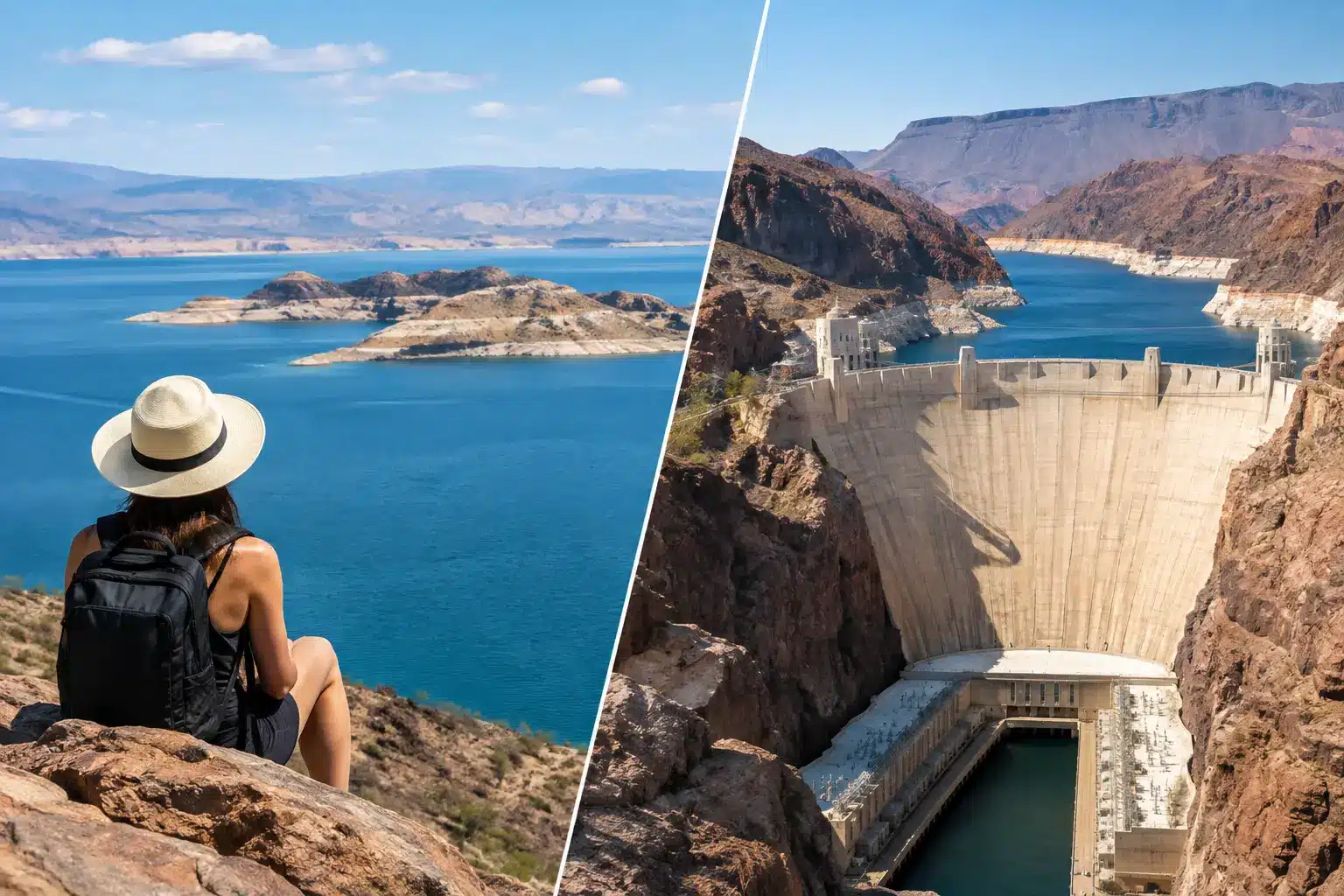
Hoover Dam and Lake Mead are inseparable in one important way: the dam created the lake. Visiting both gives the story its full shape. At Hoover Dam, you see the human ambition and engineering behind the project. At Lake Mead, you see its vast result spread across the desert.
That pairing is why a guided day trip can be more rewarding than driving yourself. A local guide handles the route, parking considerations, timing, and the small details that visitors may miss. More importantly, the stops become connected rather than random. You understand how the dam, river, reservoir, regional growth, and desert environment all fit together.
For guests departing from Laughlin, a small-group or private outing also means more time enjoying the scenery and less time studying maps, watching traffic, or trying to decide which overlook is worth the detour. Desert Wonder Tours builds these regional experiences around the pace of real travelers, with transportation, local insight, and room to enjoy the day rather than race through it.
Practical Planning for Your Day Trip
The season matters more here than many visitors expect. In summer, early departures are your friend. Temperatures around concrete, pavement, and exposed overlooks can climb quickly, so a cooler morning start makes walking and photography far more comfortable. Bring water, sunscreen, sunglasses, and a hat even if your itinerary is mostly vehicle-based.
During spring and fall, you can usually spend more time outside and enjoy a longer combination route. Winter can be excellent for clear views and comfortable daytime sightseeing, though desert mornings and evenings may feel surprisingly cold. Layering is smarter than assuming Southern Nevada is always hot.
Accessibility and mobility are worth considering before you choose. Hoover Dam has viewpoints and walking areas, but some routes include stairs, inclines, or uneven surfaces. Lake Mead experiences range widely, from scenic drives with minimal walking to active water-based adventures. Tell your tour operator what your group needs, especially if you are traveling with young children, seniors, or anyone who prefers limited walking.
Photography lovers should plan for both. Hoover Dam is dramatic in broad daylight, when the structure and canyon are clearly visible. Lake Mead can be especially beautiful in softer morning or late-afternoon light, when the desert colors warm up and the water reflects the sky.
If you only have a few hours, let Hoover Dam deliver the iconic landmark moment. If you have a full day and want the Southwest to feel less like a postcard and more like a place, add Lake Mead. The best trips leave room for both the famous view and the unexpected one around the next desert bend.