The best Hoover Dam photo stop itinerary is not about racing in, snapping one picture, and heading back to the car. This is a landmark built on a scale that is hard to understand until you stand above the Colorado River, feel the canyon walls rise around you, and look across the dam toward Lake Mead. Give yourself enough time to see it from more than one angle, and your photos will tell a much better story.
For travelers looking for one of the most memorable day trips from Laughlin, Hoover Dam works beautifully as a focused half-day outing or as a scenic stop within a bigger Southern Nevada adventure. The key is choosing the right arrival time, knowing where the strongest viewpoints are, and leaving room for a few practical realities like desert heat, parking, and security screening.
Start with the Mike O’Callaghan-Pat Tillman Memorial Bridge
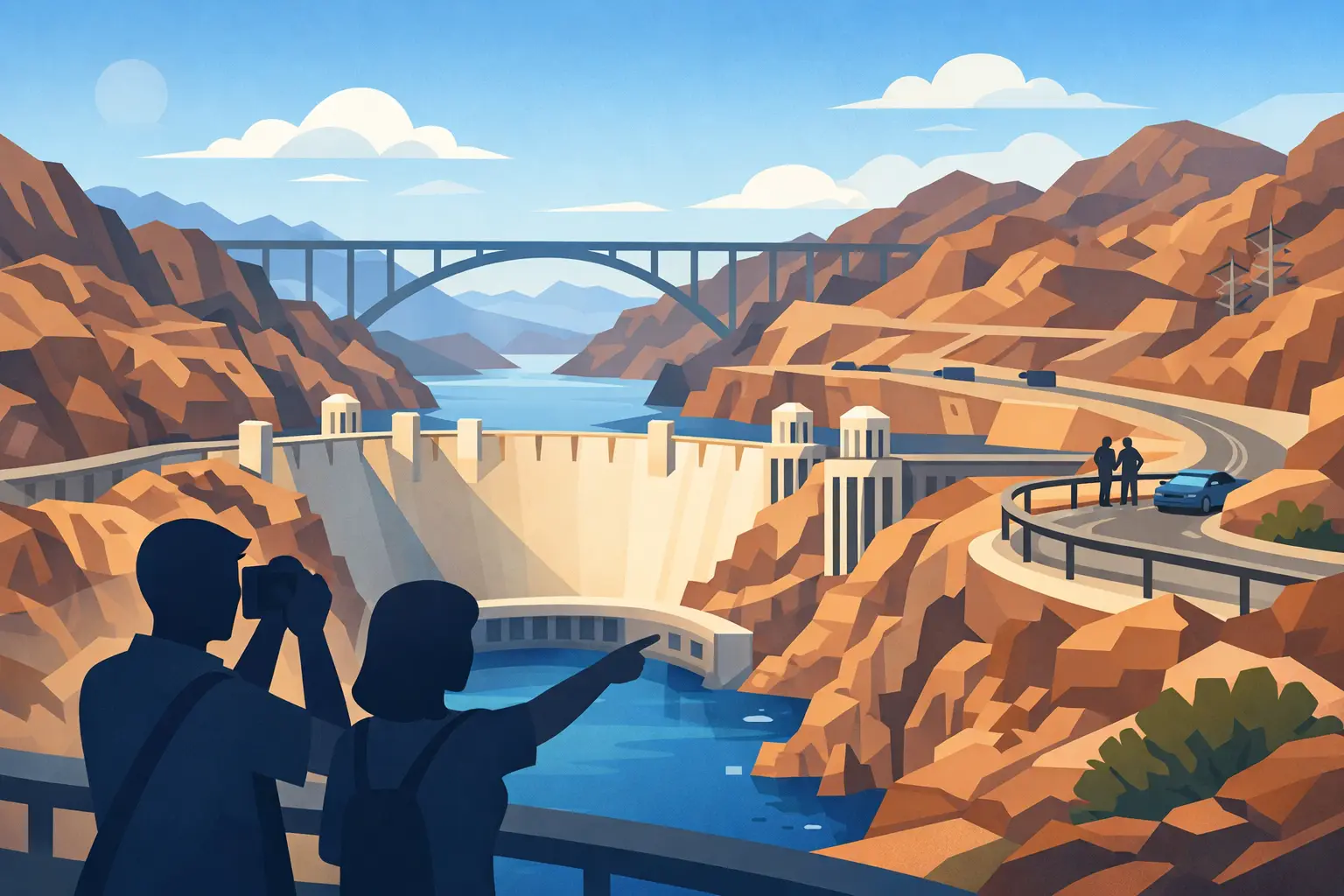
If your goal is the classic wide-angle Hoover Dam photo, begin at the bridge overlook. The Mike O’Callaghan-Pat Tillman Memorial Bridge rises high above the dam and provides the perspective that makes the structure’s size instantly clear. From the pedestrian walkway, you can photograph the dam, the black canyon walls, and the Colorado River stretching below.
Plan for a short uphill walk from the parking area to the bridge path. It is paved and manageable for many visitors, but it can feel more demanding in summer heat or for anyone with limited mobility. Bring water, wear shoes with good grip, and give yourself time to pause rather than pushing through the walk.
Morning is often the most comfortable choice, especially from late spring through early fall. The air is cooler, the light can be crisp, and you will have a better chance of avoiding the busiest part of the day. If you prefer warmer, softer light, late afternoon can be excellent, but expect stronger shadows and more visitors near sunset.
For photos, do not stop at the first view. Walk farther along the bridge walkway and look for a composition that includes the sweeping curve of the dam, the intake towers, and the river below. A vertical frame emphasizes the drop into Black Canyon, while a horizontal shot captures the massive span of dam, canyon, and reservoir.
Continue Your Hoover Dam Photo Stop Itinerary at Dam Level
After the bridge, head down to Hoover Dam itself. This is where the details come alive: the Art Deco design, the monumental concrete walls, the turquoise water, the winged figures near the Nevada-side entrance, and the Arizona-Nevada state line marker.
The dam is an active federal facility, not just a roadside attraction. Follow posted rules, allow extra time for vehicle screening when required, and be prepared for changing access procedures. Large bags, certain items, and drones may be restricted. Drone flights are not a casual photo option here, so leave them at home and focus on the remarkable views available from public areas.
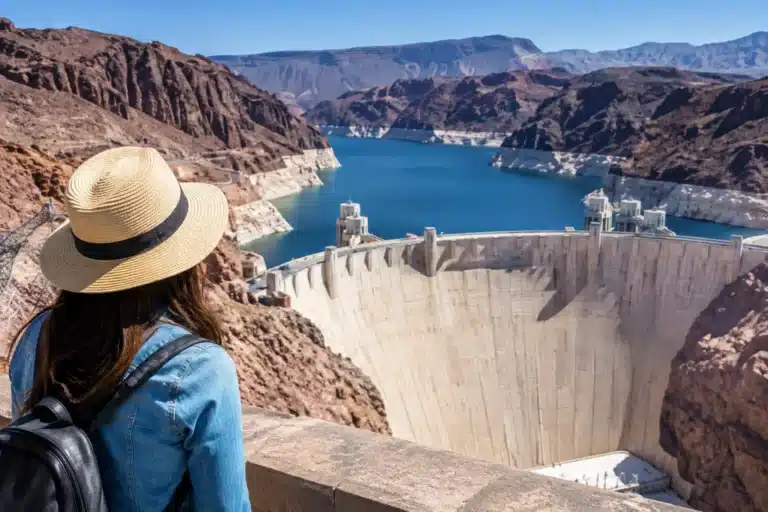
A walk across the dam gives you several photo opportunities in a relatively short distance. On one side, Lake Mead opens out in a broad expanse. On the other, the downstream view reveals the power of the Colorado River corridor and the dramatic concrete face of the dam. The best approach is to move slowly, look both directions, and photograph a mix of big scenic shots and close-up architectural details.
The famous state line is fun for a quick keepsake photo, especially for families. Just remember that the site can be busy, so be courteous around other visitors trying to get their own shot. A guide can help keep the stop moving smoothly while still making sure everyone has time for the must-have photos.
Give yourself 90 minutes to two hours
For most visitors, 90 minutes is the sweet spot for the bridge overlook, dam-level walk, restrooms, and photos. Allow two hours if you want a slower pace, are traveling with children, or plan to take a dam or power plant tour if available on your date.
Trying to do Hoover Dam in 30 minutes usually means choosing only one viewpoint. That can work if it is part of a packed itinerary, but you will miss the chance to experience both the elevated bridge perspective and the up-close engineering details.
Choose the Right Time for Photos and Comfort
Hoover Dam sits in a high-desert landscape where conditions can change the feel of a visit dramatically. Summer afternoons can be intensely hot, with reflected heat from pavement and concrete making it feel even warmer. In that season, an early start is more than a photography tip – it is the comfortable, sensible choice.
Winter and spring can offer pleasant temperatures and clearer skies, though wind on the bridge can be surprisingly strong. Fall is another excellent season, especially for travelers who want warm weather without peak summer heat. No matter the season, bring sun protection, water, and a light layer if you are visiting early or late in the day.
Light matters, but it depends on the type of photo you want. Bright midday sun brings out the dam’s lines and pale concrete color, though it can create deep shadows. Morning light is generally easier on faces for family photos. Late-day light can make the canyon walls look richer and more dramatic, but your available time may be tighter if you are returning to Laughlin before dark.
Build a Day Trip Around the Dam
A Hoover Dam stop can stand on its own, but it also pairs naturally with nearby desert scenery and history. The best add-on depends on whether your group wants more sightseeing, more time outdoors, or a relaxed day with less driving.
For travelers who want a scenic, easygoing route, combine the dam with a Lake Mead overlook or a drive through Boulder City. Boulder City brings a different pace after the dramatic scale of the dam, with local character, dining options, and a historic connection to the dam’s construction era.
If your group wants the biggest possible day, Hoover Dam can be part of a route toward Grand Canyon West. That is a longer, fuller itinerary, so it is best for visitors who are comfortable with an early departure and a day focused on major Southwest landmarks. It is not the best choice if your priority is lingering at every photo stop.
For a more personal experience, a small-group or private tour removes the pressure of maps, parking decisions, and keeping an eye on the clock. Desert Wonder Tours can build a day around the pace your group prefers, whether that means extra time at the bridge overlook, a stop for lunch, or a broader route that combines desert scenery with the dam.
A Simple Photo Plan That Works
Arrive at the bridge overlook first, while your energy is high and the weather is likely cooler. Take your wide scenic photos there, including a few with people in the frame for scale. Then move to dam level for architectural shots, the state line, the lake view, and a closer look at the river side.
Use your phone’s standard lens before reaching for extreme zoom. The strongest images at Hoover Dam often show context: the canyon, the bridge, the towers, or the people sharing the moment. Portrait mode can be useful for a quick family photo, but a regular wide shot will better capture where you are.
If you are carrying a camera, a wide-angle lens is especially helpful at the bridge overlook. A moderate zoom can be useful for picking out the intake towers and distant details, but there is no need to bring a complicated setup. The wind, crowds, and bright sun make simple gear the most enjoyable choice.
Before You Go
Check current operating hours, tour availability, parking procedures, and security requirements shortly before your visit. Conditions and access policies can change, particularly around holidays, large events, or periods of high visitation. Parking fees and availability may also vary, so do not build your schedule around assumptions.
Bring a refillable water bottle, sunscreen, sunglasses, and comfortable walking shoes. Keep valuables out of sight in your vehicle, and never step beyond railings or designated paths for a better angle. The canyon is spectacular, but the drop-offs and heat deserve respect.
A great Hoover Dam photo stop is less about collecting a single postcard view and more about giving yourself time to see the place from above, beside, and across the water. Leave a little space in the day for that second look – it is usually the one you remember.