The old highway gets quieter west of Kingman. Desert pavement bends toward the Black Mountains, mining-era buildings appear against bare slopes, and wild burros may stop traffic with complete confidence. This guide to Route 66 ghost towns is for travelers who want more than a roadside photo: a day filled with mining history, mountain views, and the wonderfully offbeat character that makes this stretch of Arizona so memorable.
For visitors based in Laughlin, this is one of the best ways to trade casino lights for open road without committing to an overnight trip. The key is knowing which places are true remnants, which are living historic towns, and how to enjoy them responsibly.
Start With the Right Expectation
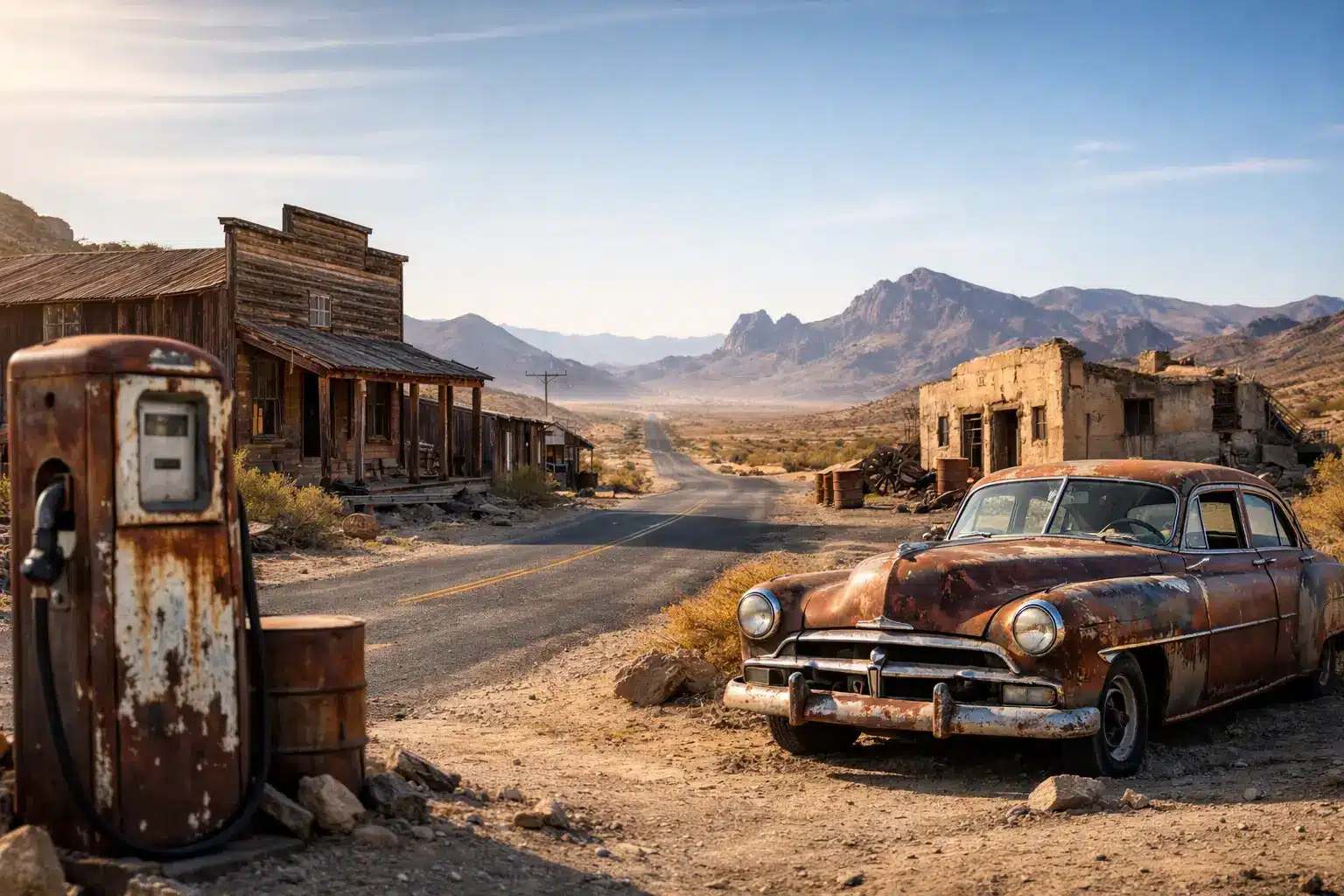
Route 66 ghost towns are rarely movie-set ruins waiting at the end of an empty road. Many of the most rewarding stops are partial ghost towns, former railroad and mining communities, preserved trading posts, or active little towns with historic bones. That mix is part of the appeal.
Oatman, for example, is not abandoned. It is a working tourist town with shops, saloons, residents, and famous wild burros. Goldroad has far fewer visible remains and a more genuinely deserted feel, while Chloride is an old mining town that still has a small community. If you arrive expecting every stop to be silent and empty, you may miss the real story: these places survived, changed, or faded according to the fortunes of mines, railroads, and the Mother Road itself.
The best approach is to treat the journey as a living history drive. Look for original road alignments, weathered structures, mine-country landscapes, old signage, and the local stories that make the scenery mean something.
Oatman: The Route 66 Stop You Should Not Skip
Oatman is the headline stop on this section of historic Route 66, and it earns the attention. Perched in the Black Mountains, it grew quickly after gold was discovered in the early 1900s. The boom did not last forever, but Oatman found a second life when Route 66 travelers began passing through town.
Today, Oatman feels like an Old West main street with a dose of real desert unpredictability. Wooden storefronts line the road, historic buildings hold shops and eateries, and burros wander freely through town. These animals are descendants of burros used by area miners, and they are the unofficial welcome committee.
Give yourself time to walk rather than simply pull in, snap a photo, and leave. Browse the historic storefronts, pause for lunch or a cold drink, and listen for details about the town’s mining days. The road into Oatman is part of the experience, especially when approaching over Sitgreaves Pass. Its tight curves, steep grades, and dramatic views are spectacular, but they demand a confident driver and a vehicle in good working order.
Do not feed or crowd the burros unless a local business provides approved feed and guidance. Keep a respectful distance, secure food in your vehicle, and remember that these are free-roaming animals, not props for a photo.
What Makes Oatman Worth a Day Trip
Oatman works especially well for families, couples, and anyone looking for something to do near Laughlin besides gambling. It combines a scenic drive, a walkable historic district, a chance to spot wildlife, and enough food and shopping options to make the stop feel easy rather than overly rugged.
The trade-off is popularity. Midday can bring a steady flow of visitors, particularly in peak travel months and on weekends. An earlier start generally means cooler temperatures, easier parking, and more time to enjoy the road at your own pace.
Goldroad: A Quieter Look at the Mining Past
Just beyond Oatman lies Goldroad, a former mining community tied to the same mineral-rich country that made Oatman boom. Goldroad once supported a substantial mine operation and the workers who kept it running. When mining activity declined, the town largely disappeared.
This is not a stop to treat like an open-air playground. Much of the former town is gone, and the surrounding land may include private property, mining claims, restricted areas, and unstable remnants. Its value is in the landscape and the perspective it gives you. As you look across the hills, it becomes easier to imagine how isolated life was for miners and their families more than a century ago.
Stay on public roads, obey posted signs, and never enter mine shafts, fenced areas, or deteriorating structures. Desert ruins can be hazardous even when they look accessible. A guided experience can be especially useful here because a local guide can help separate the meaningful historic sites from places that should be viewed only from a distance.
Chloride: A Detour That Rewards Curious Travelers
Chloride sits north of Kingman rather than directly on Route 66, but it deserves a place in a Route 66 ghost-town day for travelers who want a deeper mining-country detour. Founded in the 1860s after silver was found in the Cerbat Mountains, Chloride became one of the region’s earliest mining camps.
Unlike a fully abandoned ghost town, Chloride has held onto a small residential presence. That gives it a different personality from Oatman. You will find historic buildings, old-fashioned streets, and a slower, more residential atmosphere. The nearby hills also feature colorful murals painted on large boulders, an unexpected landmark that adds a little art to the mining history.
Chloride is best for travelers who enjoy unhurried wandering and are comfortable with a less polished stop. It may not offer the concentration of shops and activity found in Oatman, but that is exactly why some visitors prefer it. Plan it as a purposeful detour, not a quick pit stop.
Other Route 66 Relics That Complete the Story
Not every worthwhile Route 66 stop was a town. The old highway is full of relics that show how travelers moved through the desert before interstate highways took over.
Cool Springs Station, near the Oatman route, is a reconstructed service-station-style landmark that recalls the roadside businesses once essential to long-distance motorists. It is a good place to appreciate the scale of the journey. Before modern interstates, gas, repairs, cold drinks, and local advice could make all the difference on a desert drive.
Hackberry General Store, farther east along Route 66, is another beloved roadside stop, though it is not a ghost town. Its vintage signs, classic vehicles, and memorabilia make it a lively reminder of the road-trip era. If your goal is historic atmosphere rather than strict ghost-town definitions, it fits beautifully into the day.
These stops matter because Route 66 history is bigger than abandoned buildings. It is also about the people who ran gas stations, served meals, repaired tires, and welcomed travelers making their way across the Southwest.
How to Plan Your Route 66 Ghost Town Day
A comfortable day from Laughlin usually centers on Kingman, Oatman, and the historic Route 66 corridor. The exact route should depend on your comfort with mountain driving, the season, and how much time you want outside the vehicle.
If you are driving yourself, check road conditions before departure, particularly after monsoon storms or high winds. The Oatman Highway through Sitgreaves Pass is paved, but it is narrow and curving in places. It is not the right choice for every traveler, especially those uneasy with grades, switchbacks, or limited shoulders. A route through Kingman can provide a more relaxed start before heading toward Oatman.
Bring more water than you think you will need, sunscreen, a hat, and closed-toe shoes if you plan to explore uneven historic streets. Cell coverage can be inconsistent in the mountains, so download directions in advance and do not depend entirely on a signal. Fuel up before leaving larger towns, and carry snacks if traveling with children or anyone who gets hungry on a flexible schedule.
Summer calls for an early departure. Desert heat can make midday walks uncomfortable, while spring, fall, and winter often create ideal sightseeing weather. Winter mountain conditions can occasionally be colder and windier than visitors expect, so a light jacket is smart even when Laughlin feels mild.
Make the History Feel Personal
The strongest Route 66 day trips are not about checking off the most stops. They are about leaving room for the unexpected: a burro blocking the road, a historic sign worth photographing, a conversation with a shop owner, or a view that makes you understand why people built towns in such a hard and beautiful landscape.
For travelers who would rather enjoy the stories than manage mountain roads, Desert Wonder Tours can turn the route into an easy, small-group experience with local insight and transportation handled. However you travel, take your time. These old towns reveal their character slowly, one dusty street and desert mile at a time.